
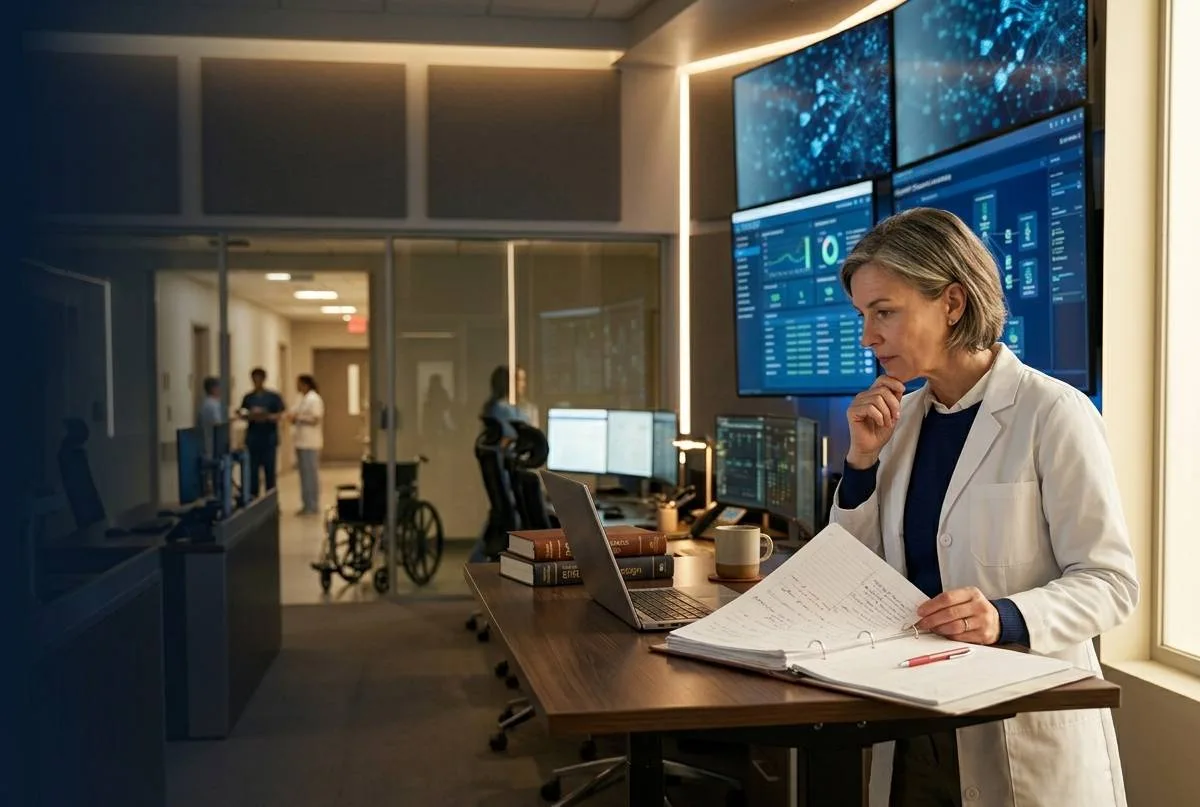
A Founder's Letter
The downtime ended. The disaster was just beginning.
Ivan Ip, MD, MS, MPH
CMIO · Founder, Lumenly Health · Weill Cornell · Stanford · UC Berkeley
I was the CMIO during a ransomware event that took Epic offline for three weeks. I have been through 15+ extended downtime events across my career. What I'm about to tell you is not hypothetical.
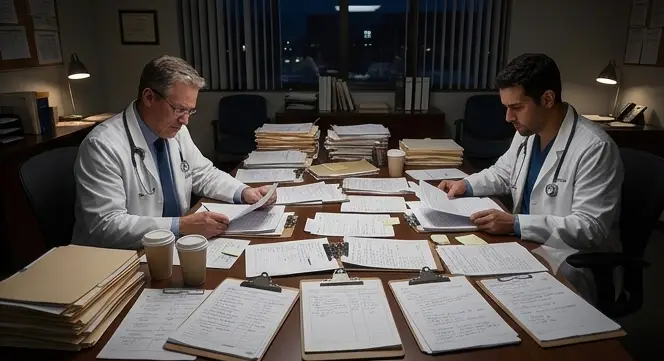
When your EMR goes down, you activate your downtime procedures. Clipboards come out. Paper MARs get printed. Nurses document vitals on flowsheets. Physicians write orders by hand. It's chaotic but manageable — your staff has trained for this, and they're extraordinary under pressure.
Then the system comes back online.
And suddenly you have 40,000 pages of paper documentation, a clinical staff that has already given everything they had, and the realization that none of it is in the EMR. Not the medications administered. Not the vital signs. Not the nursing assessments. Not the physician orders. All of it sitting in boxes — inaccessible to the care team, invisible to the billing department, absent from the legal record.
The standard answer — the only answer — is to hire temporary staff, pull your existing staff off their clinical duties, and manually re-enter the critical data. At 12–18% transcription error rates. For 6–12 weeks. While simultaneously catching up on whatever accumulated during the outage.
I looked at every vendor in the space. Ambient AI tools: live documentation — not our problem. Digital health platforms: digital records — not our problem. HIM consulting firms: bodies, not systems, at $2–3/page with the same error rate as doing it yourself. Generic OCR tools: failed on medical handwriting in real-world conditions. Nobody was solving the physical paper recovery problem.
So I built the tool I needed.
Lumenly is narrow by design. We don't do charges. We don't do live orders. We don't do ambient documentation. We do one thing: own the full downtime lifecycle — generating forms from your live Epic build before an event, and turning the paper that accumulates during one into a validated, audit-defensible, designed-for-Epic-re-import clinical record — with AI trained on handwritten medical documents, and clinician validation on every field before a single byte enters your EMR.
The clinical informatics background isn't incidental. The decisions about what to extract, how confidence scoring works, what the audit trail needs to look like for a CMS audit, how to structure HL7 messages for standard Epic import interfaces — these came from having sat in the CMIO chair during real events.
If you've managed a downtime event, you know exactly what I'm describing. If you haven't, you will. The question is whether you want to manage it with a plan that actually works.
— Ivan Ip, MD, MS, MPH
Chief Medical Informatics Officer · Founder, Lumenly Health
Weill Cornell Medicine · Stanford University School of Medicine · UC Berkeley School of Public Health
Start free.
Upgrade when you need it.
The next outage isn't a matter of if. Generate your downtime kit now — no PHI, no credit card, no contract.